Official Materials as Paratext
Finishing a film, anime series, novel, or video game does not always settle every question. A character may reveal an ability without a full explanation. A relationship may depend on events that happened before the story began. A weapon, location, or symbol may seem important even though the released work gives it little context. The ending may also leave several interpretations open.
Official guidebooks, setting collections, art books, character databooks, and production interviews can help fill these gaps, but they should not replace the work itself. A useful way to understand their role is through the concept of paratext.
Gérard Genette used the term “paratext” for material surrounding a text that influences how readers encounter and interpret it. Prefaces, notes, interviews, promotional material, and related publications can shape the reception of a work without becoming identical to the work itself.
This distinction matters because “official” describes the source or publisher, not the evidentiary value of every statement inside it. A licensed guidebook may summarize final story facts, reproduce an early draft, include a designer’s personal comments, and show unused concepts in the same volume. All of these materials may be authentic production records, but they do not prove the same thing.
Before searching, define the problem you are trying to solve. Are you confirming an event, tracing a character’s history, interpreting a visual symbol, or investigating a production decision? Matching the source to the question prevents an unused sketch, early interview, or promotional comment from being mistaken for a confirmed part of the story.
The Released Work Remains the Primary Evidence
For questions about what actually happens in the story, begin with the final released version. A scene shown on screen, a line spoken in the published game, or an event depicted in the finished novel has stronger authority than an abandoned idea described elsewhere.
This rule becomes especially important when official materials disagree. A guidebook may use simplified wording that appears inconsistent with a scene. An interview conducted before release may describe a plot point that was later removed. An art book may preserve a costume or location that never reached the final production.
In these cases, the finished work should normally take priority for claims about canon.
That does not make the other source useless. It changes the claim you can responsibly make. If an early interview says a character was intended to betray the group, but no betrayal appears in the finished story, the interview proves that the idea existed during development. It does not prove that the betrayal secretly occurred.
Different editions also require care. A theatrical cut, television edit, international release, remaster, director-approved restoration, and platform-specific version may not contain identical scenes. Before treating a guidebook or interview as contradictory, identify which version it discusses.
The same discipline applies when researching How to Find the Version Closest to the Original When Censorship and Edited Scenes Differ by Country. Interpretation becomes unreliable when one source discusses the original theatrical cut while another refers to an edited broadcast or later restoration.
Publication timing provides another clue. Material released during early promotion may describe plans rather than completed decisions. A guide published alongside the final release is more likely to reflect the finished continuity, although errors can still occur. A retrospective interview may explain production changes more clearly, but it can also contain later recollections or a creator’s revised view of the work.
The safest approach is to state exactly what each source establishes. The final version confirms what appears in the released work. Early material documents what was planned. Later commentary records how the production team understood or remembered its decisions.
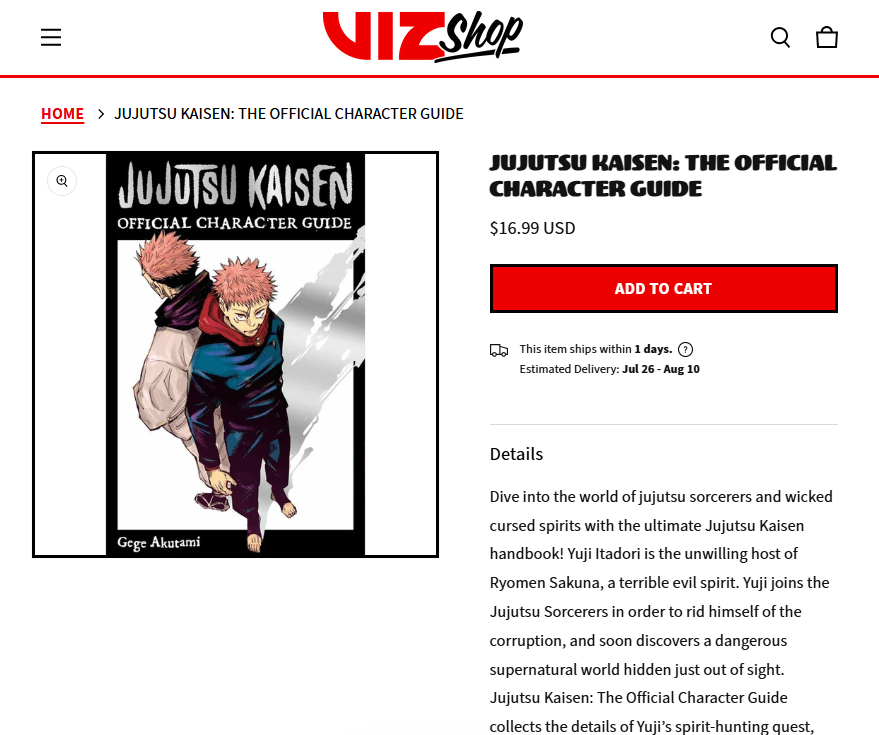
Official Guidebooks and the Limits of Supplementary Canon
Guidebooks are most useful for organized factual questions. They often collect character profiles, timelines, terminology, geographic information, ability conditions, faction structures, and relationships that the main work presents only briefly.
Once you find a relevant passage, read its wording closely. A direct statement such as “the character left the capital to protect their family” differs from “the writers initially considered giving the character a family-related motive.” The first supplements the released narrative. The second records a possibility considered during development.
The surrounding page can also change the meaning. A caption beside final character statistics is not equivalent to a note in a section labeled “early proposals.” Translated excerpts shared on social media may omit headings, dates, footnotes, or qualifying language.
Whenever possible, identify the book title, publisher, edition, page number, and original context before relying on a quotation. A cropped image containing one sentence may be authentic while still hiding the information needed to interpret it correctly.
A guidebook is strongest when it adds information without forcing the reader to disregard the work. Suppose the story shows that an ability requires physical contact, while the guidebook specifies that contact must last three seconds. The two sources reinforce each other because the supplementary detail fits the rule already depicted.
The situation changes if the guidebook says contact is unnecessary while the released story repeatedly establishes the opposite. The contradiction should be acknowledged rather than quietly resolved in favor of the book.
Possible explanations include an editorial mistake, a change made late in production, a translation problem, or a guide based on an earlier script. Unless another source resolves the issue, the most accurate wording is that the guidebook conflicts with the released work.
A guidebook therefore functions best as supplementary canon. It can organize, clarify, and expand information, but it should not automatically override what the audience can directly observe in the completed work.
Art Books as Evidence of Visual Development
Art books answer a different class of questions. They are valuable for studying character silhouettes, costume changes, color palettes, environments, props, interfaces, creature designs, and the progression from early concepts to final assets.
The difference between an early design and the released version can reveal what the production team chose to emphasize. Clothing may become less decorative to improve readability during action scenes. A location may shift from warm colors to colder tones to strengthen its emotional atmosphere. A complicated machine may be simplified because it was difficult to animate consistently or because players needed to recognize its function quickly.
These observations can support interpretation, but the image must be labeled correctly. An unused drawing is evidence that the team explored an idea. It is not automatic evidence that the object, costume, or event exists somewhere outside the visible story.
A useful art-book reading begins with three questions. What changed between the concept and the final version? Do the accompanying notes explain the change? Does the relevant feature survive in the released work?
This sequence separates production history from story fact.
Suppose an early sketch shows a protagonist carrying a religious symbol that disappears from the final costume. The sketch may support a discussion of an abandoned visual direction. It cannot, by itself, establish the protagonist’s religious beliefs in the final story.
The interpretation becomes stronger if the same symbol remains in the finished environment, appears in a guidebook description, and is discussed by the art director. Several different sources are then pointing toward the same visual idea.
Changes can also reveal which themes or emotions the production team wanted to strengthen. A threatening location may become narrower and darker between the concept stage and the finished scene. A character initially designed with bright clothing may receive a muted palette after their role becomes more serious.
Even then, interpretation should remain tied to visible evidence. The art book can show how the design developed and explain why certain choices were made. It cannot turn every discarded feature into hidden lore.
Staff Interviews Explain Intention Without Fixing Meaning
Interviews are especially useful for questions about creative decisions. A director may explain the pacing of an ending. A writer may describe the development of a character arc. A designer may discuss the visual logic behind a costume. A producer may clarify why a scene, mechanic, or location was removed.
The speaker’s role determines the scope of the evidence.
An actor can provide authoritative testimony about how they approached a performance, but not necessarily about the official history of the fictional world. A concept artist can explain why a design was explored, but may not know why it was later rejected. A producer may understand budget and scheduling decisions better than the symbolic meaning of an individual scene.
The date and setting of the interview matter as well. Early promotional interviews may describe unfinished plans or avoid spoilers. Post-release discussions usually relate more directly to the completed work. Informal convention remarks may be less precise than an edited interview in which the speaker had an opportunity to review the wording.
Even a statement from the principal creator should not automatically close interpretation. W. K. Wimsatt and Monroe C. Beardsley’s discussion of the “intentional fallacy” challenged the practice of treating an author’s intention as the final standard for a work’s meaning. Their argument does not require ignoring interviews. It warns against replacing analysis of the work with a claim about what the creator meant.
A director’s statement that a scene was designed to make the audience feel trapped is valuable evidence of intention. The framing, editing, sound, dialogue, and narrative context still need to support that reading.
Viewers may also identify meanings that the creator never stated. Such interpretations remain valid possibilities when they are grounded in details from the work. They should simply be presented as interpretations rather than confirmed production facts.
The distinction becomes clearer through careful wording. “The director wanted the scene to suggest isolation” reports creative intention. “The scene uses an empty frame and distant sound to isolate the character” analyzes the finished work. “The scene proves the character has abandoned all hope” is a stronger interpretation that requires additional evidence.

Cross-Reading Sources Before Reaching a Conclusion
The strongest interpretation rarely depends on one isolated quotation. It develops by comparing the released work with guidebooks, art books, and interviews while respecting what each source can establish.
Begin with the scene, line, mechanic, or image that created the question. Record what the released work confirms and what it leaves uncertain. Then consult the source best suited to the gap.
Guidebooks are useful for chronology, terminology, and background facts. Art books reveal visual development and discarded designs. Interviews explain production decisions and stated intentions. None of these sources should be expected to answer every type of question.
Next, look for repeated details. A motivation supported by the finished scene, an official profile, and a post-release interview has a stronger foundation than a claim appearing only in an undated screenshot. Agreement among sources with different functions reduces the chance that the conclusion depends on a mistranslation, abandoned plan, or individual interpretation.

When sources conflict, separate them by publication date, production stage, speaker role, and version of the work. A pre-release interview may reflect an earlier script. A later guidebook may summarize the final continuity. An actor’s interpretation can coexist with a writer’s explanation when they address different aspects of the scene.
Wording should preserve those distinctions. State that the released work confirms an event, the guidebook adds background, the art book records a design considered during production, or the director explains an intended effect. Do not combine several limited statements into a stronger claim than the evidence supports.
Official materials are most useful when they sharpen the boundary between fact and interpretation. They can answer practical questions, reveal how a production evolved, and show what creators hoped to communicate. They cannot guarantee that every ambiguity has one official solution.
A careful investigation makes clear which conclusions rest on the released work, which come from supplementary sources, which reflect creative intention, and which remain open to the reader’s interpretation.